Picture
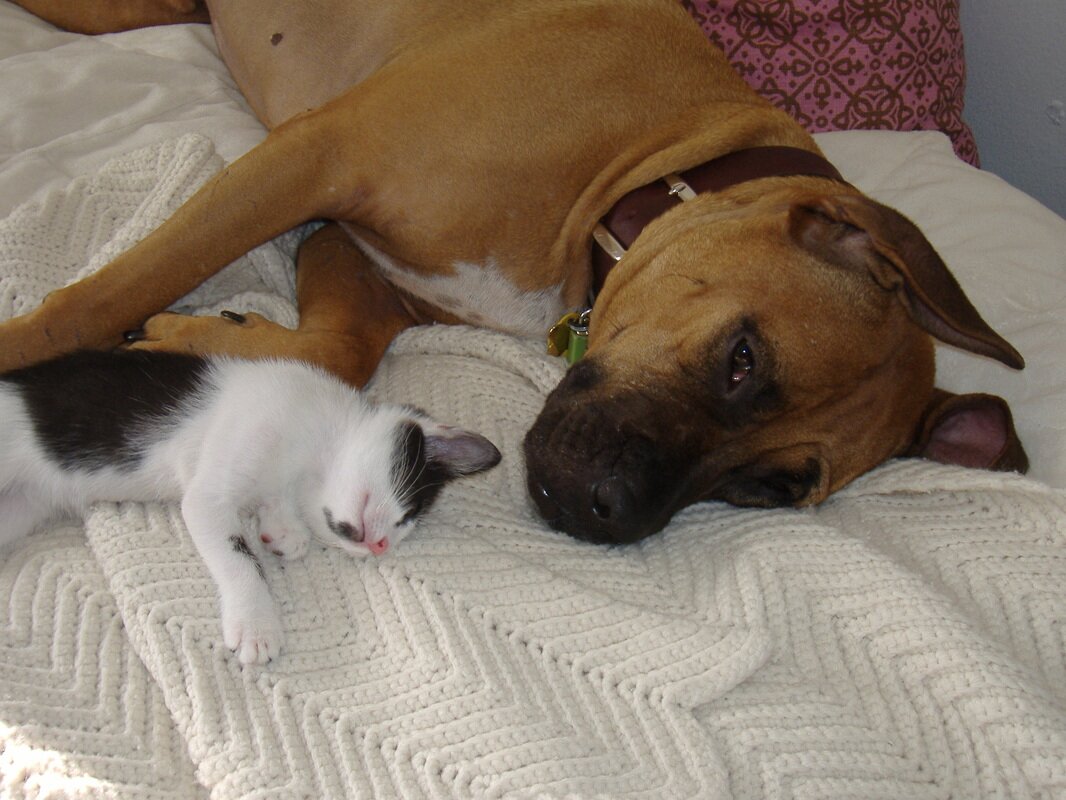
Lambo, the beloved dog of a Wisconsin woman, was shot and thrown on the side of the road three days after the judge in a divorce declared her marital property and ordered her to be returned to the abusive ex-husband. Please, let's keep our families, including pets, safe from domestic violence!
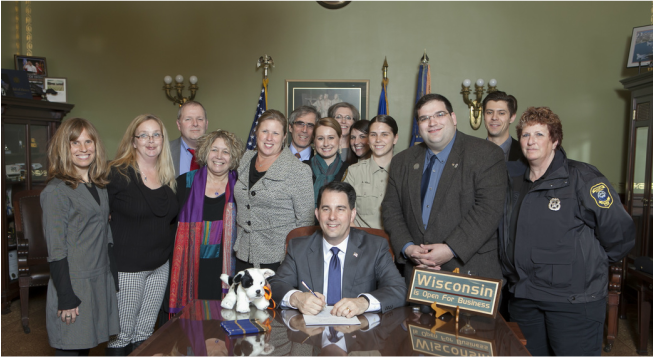
This past February, Governor Walker issued a press release announcing an $11 million domestic violence budget investment “aimed at protecting Wisconsinites by expanding care and centers for the abused and their children.”

www.walker.wi.gov/Default.aspx?Page=f267c1a7-bc59-4144-8841-71358c6c0e73

While Gov. Walker is to be commended for his commitment to keeping our families safe from dangerous abusers, what is noticeably absent is a commitment to keeping our families’ pets safe from those same abusers.

One potential safeguard would be to enact a law that would allow courts to include family pets in domestic violence protection orders. According to the Humane Society of the United States 2012 Humane State Ranking report, 25 states have such a law in place, including Minnesota and Illinois.

Madison attorney Megan Senatori supports such an idea. She is the president of SAAV (Sheltering Animals of Abuse Victims),  a 501(c)(3) all-volunteer nonprofit organization dedicated to raising community awareness regarding the prevalence of animal abuse in families affected by domestic violence.  Through a collaboration with Domestic Abuse Intervention Services and the Dane County Humane Society, SAAV also provides temporary, confidential shelter for the animals of domestic abuse victims for a period of up to 90 days, primarily through a network of foster homes.

Megan co-founded SAAV with law school friend and colleague, Pamela D. Hart, in 2001. A shareholder at the Madison law firm of DeWitt Ross & Stevens S.C., Megan is also an Adjunct Faculty Member at the University of Wisconsin Law School and Marquette University Law School where she teaches a course in Animal Law.

In a recent interview, Megan shared her views on why Wisconsin needs to bring pets into the discussion of domestic violence prevention and legislation.

1. What are your thoughts about the creation of a state law that would provide for protective orders for domestic abuse victims with pets? And are there statistics or studies to support the idea?

State laws that provide for “pet protective orders” are critical to protecting domestic abuse victims and their animals.  The exact form of these types laws vary, with some states simply allowing a domestic abuse victim to use animal abuse as a basis to obtain a restraining order for herself, while other states enable the court to also directly protect the animal from abuse by including the animal in the protective order.  Regardless of the form, these types of laws are extremely important to protect domestic abuse victims with animals in their family.
 
A 1995 study of women’s shelters in Wisconsin showed that 86% of the women had pets, and 80% of those women reported that the batterer had also been violent to their pet.  Animal abuse is a tremendously effective (and traumatic) way for a batterer to exercise power and control over his victim.  Three separate studies have documented that from 18% to 40% of women seeking shelter at a crisis center reported that concern for the welfare of their animals prevented them from seeking shelter sooner, in some cases for more than two months.
 
Harming a beloved animal is a very real symbol of what the batterer can do to the victim.  Victims understand that.  We commonly hear from victims who did not leave their batterer, or who delayed leaving their batterer, because they did not have a safe place for their animal if they sought safety for themselves.  When a batterer targets a family pet or other animal, there is no question it should be a basis for the victim to obtain a domestic abuse restraining order.  Current Wisconsin law relating to domestic abuse restraining orders does not mention animal abuse.  This is a very real problem that requires a legislative solution.
 
2. What are the benefits to having this law?
 
Batterers know that they can torment and control their victims by abusing, or threatening to abuse, an animal that the victim dearly loves.   Pet protective orders allow the domestic abuse victim to obtain a restraining order in that situation and, therefore, remove a "tool" from the arsenal of ways that batterers try to control their victims.
 
3. What can animal supporters do to help see this law created, sponsored, and enacted?
 
Education and community outreach is the key to passing legislation to protect domestic abuse victims with animals. Many people simply do not realize that animal abuse is prevalent in families affected by domestic abuse.  To achieve changes in the law, however, it is important that animal supporters move beyond preaching to the choir.  We must look for commonality with folks who are simply not necessarily “animal lovers” or interested in laws to protect animals, because wide-spread support is critical to achieving legislative victory.

4. You teach a course in Animal Law at University of Wisconsin Law School and Marquette University Law School. Are there any other animal cruelty laws that
 you feel need to be created, revisited or amended in Wisconsin?
 
If I had my “wish list” there are many changes that I would make to Chapter 951, Wisconsin’s Animal Cruelty and Neglect laws.  While Wisconsin is ahead of many states, its animal protection laws are not nearly as comprehensive as some of our neighbors, such as Illinois.  Illinois routinely ranks at the top of the list for animal protection laws because Illinois law addresses not only punishment for violations, but also progressively attempts to identify root causes.  For example, Illinois includes provisions that enable a court to require counseling in animal abuse cases.  Illinois law also contains a penalty enhancer when animal abuse occurs in front of a child.  And, of course, Illinois allows animals to be included in domestic abuse protective orders.   Research confirms that there is a relationship between animal abuse and crimes against humans.  Therefore, a comprehensive scheme of animal protection laws is critical not only to protecting animals, but also to protecting our fellow human beings


For more information on the link between animal abuse and domestic check out these resources:
http://www.americanhumane.org/interaction/support-the-bond/fact-sheets/animal-abuse-domestic-violence.html

http://www.aspca.org/fight-animal-cruelty/domestic-violence-and-animal-cruelty.aspx

http://www.humanesociety.org/issues/abuse_neglect/qa/cruelty_violence_connection_faq.html

Denice Ryan Martin, a volunteer with Wisconsin Voters for Companion Animals, is a freelance writer, licensed social worker and animal welfare advocate.  She’d like to hear your thoughts on this topic. E-mail her at martin22@wi.rr.com    


Milwaukee Area Domestic Animal Control (MADACC) has killed 747 animals so far this year through March 2013. (This does not include those that died in their kennel, were dead on arrival, or were owner-requested euthanasia).

Four hundred and four dogs, 332 cats and 11 other animals died at MADACC.  The chart above shows the comparisons from last year to this year and also the breakdown of the March statistics.  The new Executive Director, Karen Sparapani, started on February 16 so this is the first full month of statistics under her directorship. April statistics will not be available until after the May operations committee meeting. 

Intake is down (a good thing!) and so are shelter deaths. But unfortunately, reclaims and transfers are also down for the year.

Progressive animal sheltering that saves lives relies on two things - reducing intake and increasing live outcomes.

Shelters can reduce intake by: proactively reuniting more lost pets with their families, preferably before they even reach the shelter; offering low cost spay and neuter services; offering trap, neuter, return programs for feral cats; and by reducing surrenders and "abandonment at the shelter" through excellent customer service and animal help desks.

Shelters can increase live outcomes by transferring animals to other rescues and shelters; offering medical and behavior rehabilitation; using volunteers to socialize, train and foster animals; and creating innovative adoption and marketing programs.


Dear Mrs. XXXX:
 
Thank you for contacting me to express your support for H.R. 366, the Animal Fighting Spectator Prohibition Act of 2013. I appreciate hearing from you.
 
As you know, H. R. 366 would amend the Animal Welfare Act (AWA) to prohibit any person from knowingly attending an animal fighting venture or assisting a minor to attend such an event. The bill would also increase criminal penalties for individuals who violate these changes in the AWA.
 
On January 23, 2013, H.R. 366 was referred to the Committee on Agriculture and the Committee on the Judiciary. I will be sure to keep your views in mind should I have the opportunity to vote on this legislation in the future.
 
Please continue to contact me on issues of concern.
 
 
Sincerely,

Thomas E. Petri
Member of Congress

Thomas Evert Petri is the U.S. Representative for Wisconsin's 6th congressional district, serving since 1979.  He is a member of the Republican Party.  The district includes most of the east-central part of the state. 


Wednesday, April 3, 2013

Dear Ms. XXXXX

 Thank you for contacting my office with your concerns regarding the staffing of the Milwaukee Area Animal Control Commission (MADACC).  I appreciate your taking the time to share your thoughts with me.

 I am dedicated to ensuring that the animals in the City of Milwaukee are safe, healthy and cared for and I commend MADACC for providing effective and cost efficient animal control services. As you know, MADACC represents 19 municipalities in Milwaukee County and their work assures temporary shelter is available, veterinary and humane care for animals in need is prioritized and a central location for owners to find and recover their lost pets is accessible to the public.

I have heard from a number of constituents who share your concerns over the future of MADACC. I want you to know that I have shared your message with the other participatory municipalities and MADACC staff. I am confident that the recently appointed Executive Director, Karen Sparapani, will demonstrate capable leadership during this transition and I urge you to welcome her perspective and continue participating in this discussion in a productive manner.

Again, thank you for sharing your thoughts with me. Your concern for this issue is admirable.   Please do not hesitate to contact my office with any other issues you feel merit my attention.

 Sincerely,

Tom Barrett
Mayor


(We have heard that several people received the same reply)
 
 
Reposted from STOP BSL.  Thank you for the heads up!


Last week a resident of Chippewa Falls approached officials with a story about how her cat was killed by a dog she identified as a “pit bull.”


In response to that officials are looking into a breed ban.


The spurring incidents pose some serious questions for the community about how to increase public safety but a ban is not an effective use of time or resources. Time and time again, cities with breed bans do not see a decrease in attacks by dogs. Often the corollary is the exact opposite, that attacks increase due to the diversion of funds in animal control. Any time money is taken away from addressing the true issues involving dangerous dogs the community suffers.


If Chippewa Falls were to institute a ban it would end up costing the tax payers a minimum of $21,000 a year, per the Best Friends Animal Societies fiscal calculator.  This may not seem like a lot of money to some but when put into the perspective that the town has a population of just over 13,500, and the fact that one instance of litigation could easily triple that number, everyone in the community loses.


Picture
Candidate Steve Zgonc
Steve Zgonc is running for 5th District alderman.  Zgonc previously served on the council from 2005 to 2011. Here are his comments on the proposed Breed Discriminatory Legislation in Watertown.

What is your position on the issue of controlling certain breeds of dogs in the community as a safety measure?

Safety is always a major concern for me.  Some breeds of dogs are proven to be more dangerous than others.   Owners of these breeds have to know this and take more precautions with their pets.  Still, the owner of any pet is still responsible for any actions of their pet.  There has to be strict penalties in place for the owner if there is any neglect to ensure the safety of other citizens.

(reprinted from the Watertown Daily Times, Saturday March 23, 2013)
 
 
Picture
Candidate Bob Mudler
Bob Mudler is running for the first time for the 1st District Council seat. Here are his comments on the proposed Breed Discriminatory Legislation in Watertown.

What is your position on the issue of controlling certain breeds of dogs in the community as a safety measure?

I have a problem with local government controlling which dogs a Watertown resident can and or can't buy, until it becomes a safety concern.   When resident safety is a t risk, we have to work together to ensure safety measures are taken.  Whatever the situation, a dog owner has to be accountable for their pet, and the responsibility has to fall directly on the owner.  Banning or controlling dog breeds in Watertown is not the answer.   Holding the owner accountable and providing the appropriate outlets for training is more productive.


(reprinted from the Watertown Daily Times, Saturday March 23, 2013)


Picture
Alderman James Romlein
James Romlein is running for his second term as the 9th District Alderman.  Here are his comments on proposed Breed Discriminatory Legislation in Watertown.  

What is your position on the issue of controlling certain breeds of dogs in the community as a safety measure?

This is an easy question for me.  I see dogs and all animals in the city like I see other possessions of city residents.  If we have a series of drunk driving fatalities, we don't legislate a ban on automobiles, and heaven forbid, if we have a stray Rhode Island Red loose on the streets we don't single out chickens for special action.  


I believe that the actions of dogs are the responsibility of their owners and we should hold the pet owners accountable for actions of their pets.   With liberties there are responsibilities.  Often there is an attempt to legislate the tool since it is easier than confronting the tool holder.  In the well known Commandment "Thou shall not kill," the responsibility rest with "Thou."  If the commandment were to read "Thou shall not kill with a chicken, pit bull dog, or gun" then we could have some reason to follow a different legislative course.  In short, make the pet holder responsible for the actions of their pets, then the legislation will be applicable for all pets, even those pesky Rhode Island Reds. 


(reprinted from the Watertown Daily Times, Saturday March 23, 2013)
 
 
Two weeks ago we posted the following information about the Milwaukee law firm, John T. Fields and Associates. 


Our Milwaukee divorce lawyers will fight like a pitbull...to protect you and your children from the person you used to trust.” 

Are you shocked by this language? These are the inflammatory words the Wisconsin law firm of John T. Fields and Associates are using on their website. We find this unacceptable as it enforces the false stereotypes surrounding these great dogs. 

Reinforcing false stereotypes about this breed is highly prejudicial and discriminatory. It is quite Ironic that this is coming from a law firm, since law firms are supposed deliver justice, not reinforce bigotry  Perhaps they should hire a marketing firm, as I'm positive there are better ways to advertise than to unfairly target innocent dogs.

Please respectfully contact Attorney John Fields via the Contact tab on his website or call him at 262-782-8322 to voice your displeasure.


Since then we have learned that in two Florida cases consolidated on appeal, The Florida Bar v. Pape and The Florida Bar v. Chandler, 918 So.2d 240 (2005), two Florida attorneys were disciplined under the Rules of Professional Conduct for using advertisements analogizing themselves as pit bulls.

We have a process for filing grievances in Wisconsin against lawyers.  Here is the link:  
http://www.wicourts.gov/services/public/lawyerreg/file.htm

We encourage everyone to take a few minutes to either call in a grievance (608) 267-7274 or (877)315-6941 or fill out the Grievance form at the link above and mail it in to voice your displeasure.

Here is sample wording that may help you to file your grievance: 

On Attorney Fields website, http://pitbull-attorney.com, he states the following:  "Our Milwaukee divorce lawyers will fight like a pitbull... to protect you and your children from the person you used to trust."
In two Florida cases consolidated on appeal, The Florida Bar v. Pape and The Florida Bar v. Chandler, (2005), two Florida attorneys were disciplined under the Rules of Professional Conduct for using advertisements analogizing themselves as pit bulls.  Although advertising rules are very different from state to state, the core values are the same.  I'm sure the State Bar of Wisconsin doesn't want this type of advertising demeaning their profession.  I think most bars would agree that this type of advertising does so. 


Reinforcing false stereotypes about a breed of dog is prejudicial and discriminatory.  I find it quite ironic that this language is coming from a law firm.  Their job is to deliver justice, not reinforce bigotry.  I'm positive there are more professional ways to advertise than to unfairly target a particular breed of dog.  

Thank you to Attorney Fred Kray, of Pit Bulletin Legal News Network for providing information for this blog. 


Even in non-election years, we, as voters, have the right to let our elected officials know how we feel about an issue and try to influence their votes regarding it.  And as pet lovers, now is the time for us to exercise that right.

On March 8th, Wisconsin state senator, Tim Carpenter, put bill, LRB 1643/1, before his colleagues and asked them to co-sponsor the legislation.  LRB 1643/1 was drafted to make significant and meaningful changes to Wisconsin’s laws regarding animals seized by a city, county, town, or village.

The deadline for state legislators to express their support for this potentially “game-changing” bill is 12pm on Friday, March 22, 2013, which is a mere two weeks away from the date this post was published.  So, as voters and animal lovers, we must make the most of this limited window by contacting our respective state representatives and senators to ask them to support LRB 1643/1…and by asking everyone we know to do the same.

If you are unsure about who your district’s current state senator or representative is, you can easily research your legislator’s name by clicking here.  When you contact your state legislator, make sure you tell the individual you want him or her to support LRB 1643/1 and remember to share your name.

Among the significant changes LRS 1643/1 is drafted to achieve are shortening the length of time animals seized under Chapter 173 or Chapter 951 are held in captivity by a city, county, town, or village and enabling courts to require owners to reimburse the entity that seized their pets to pay for costs incurred by the authoritative body to house and care for their pets after they were seized.

To learn more about why you and each of our state’s legislators should sponsor LRB 1643/1 as well as the exact changes the bill purports to make to Wisconsin’s laws, click here.


animal welfare, humane legislation, companion animals, voters, Wisconsin, animal advocates, animal advocacy, watchdogs,